Eight deals, one place.
Deal HQ is where an acquisition actually gets done — the pipeline, the numbers, the diligence and the documents, against the deal they belong to. Built from the way 50+ completed acquisitions were run, not from how software companies imagine it.

You are already doing this. Just in four places.
Nobody buys a business without a spreadsheet, a folder and a lot of memory. Deal HQ is those three things, joined up.
The spreadsheet that only you understand
Valuation in one file, the offer in another, last month's version overwritten. The modeller holds the numbers against the deal, and keeps the versions.
A folder per target, on one laptop
Accounts, notes, heads of terms, the seller's email about the lease. All of it filed against the deal it belongs to, reachable from anywhere.
Remembering where eight deals got to
Which one is waiting on you, which seller has gone quiet, which needs an answer this week. The pipeline answers that in a glance.
Seven stages. The real ones.
Not a generic sales funnel with the words changed — the stages an acquisition actually moves through, including the ten-minute first call that saves weeks.
Sourcing
First call
Valuation
Negotiation
Heads & DD
Legals
Completion
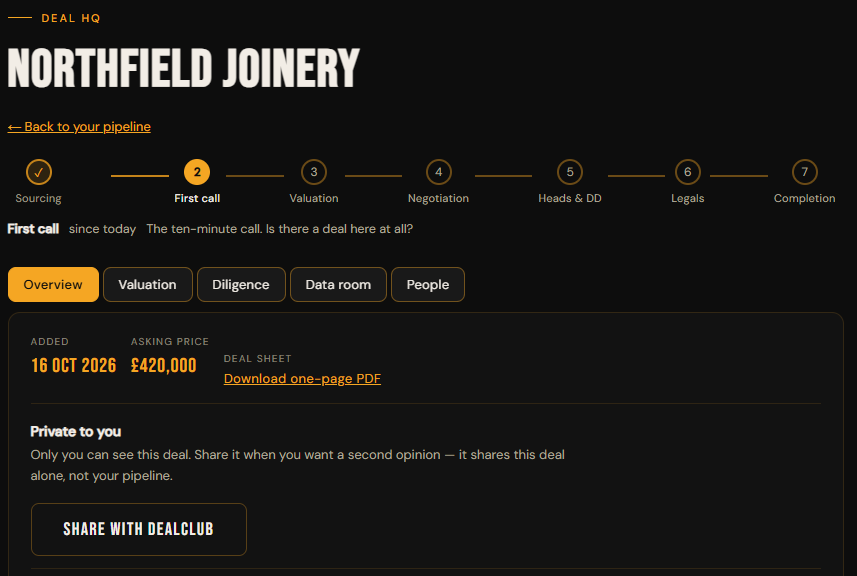
A deal that dies at Negotiation stays recorded as having got to Negotiation. “Lost” is not a later stage than “Legals” — so the record of how far something got survives it going nowhere.
“They want £1m for a business making £10k.”
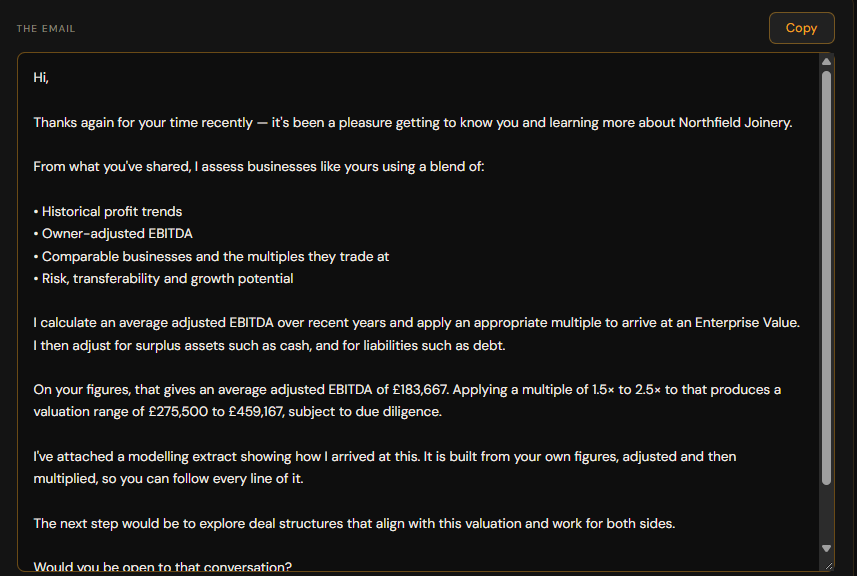
That is 100 times earnings, and it takes one division to know it. Deal HQ puts the implied multiple of the seller's asking price next to the multiple you are actually paying, so the conversation starts from arithmetic instead of optimism.
And it answers the question underneath every deal: can the business afford the debt you are about to put on it? The profit left after financing, divided by what the financing costs, against a target of 1.5× — red, amber or green, before and after completion.
The maths came out of the spreadsheet these deals were actually done on, line by line, and is tested against completed deals rather than invented.
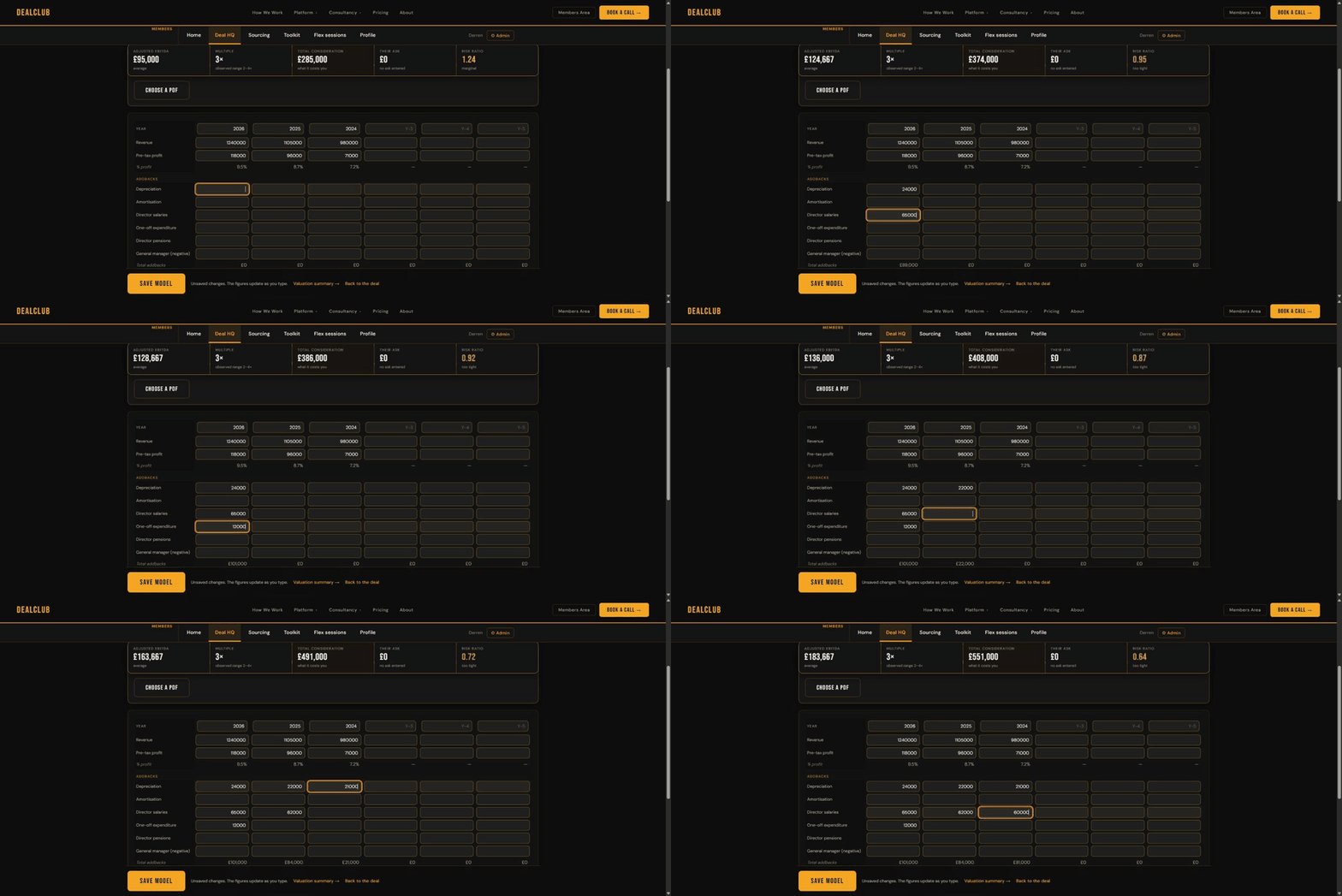
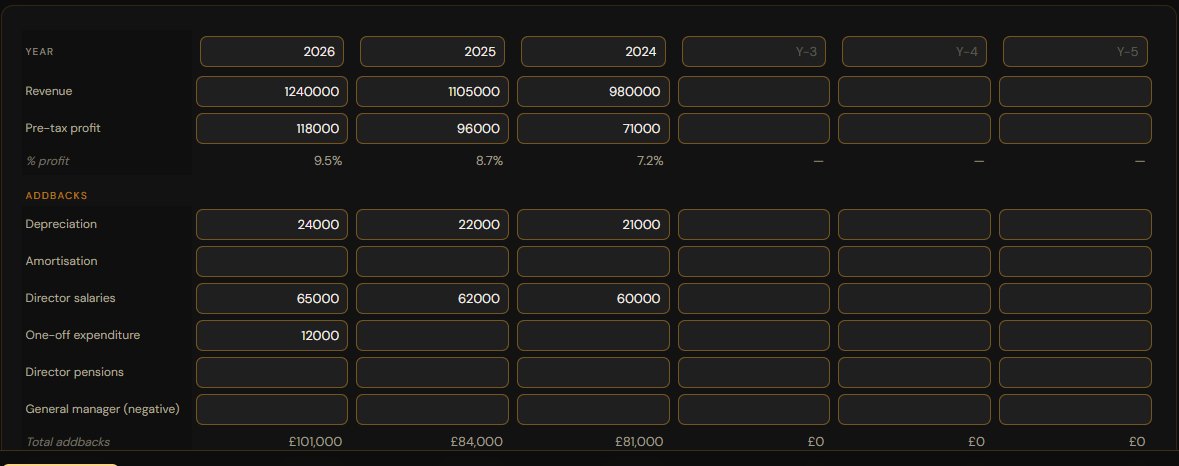
Adjusted EBITDA, with the add-backs shown
Owner's salary, personal costs, one-offs — each listed as a line you can argue with, not buried in a single adjusted figure.
What the debt actually costs
Repayments calculated properly across the term, so the deal is tested against what leaves the bank account each month rather than against the headline price.
Surplus cash and working capital
What is genuinely spare versus what the business needs to keep trading — the number sellers and buyers disagree about most.

From first look to completion day.
Company lookup
Pull a target straight from Companies House — officers, filing history, accounts dates — rather than retyping it.
Accounts upload
Drop in a set of filed accounts and the figures are read out of them, including filleted accounts and brackets-for-losses.
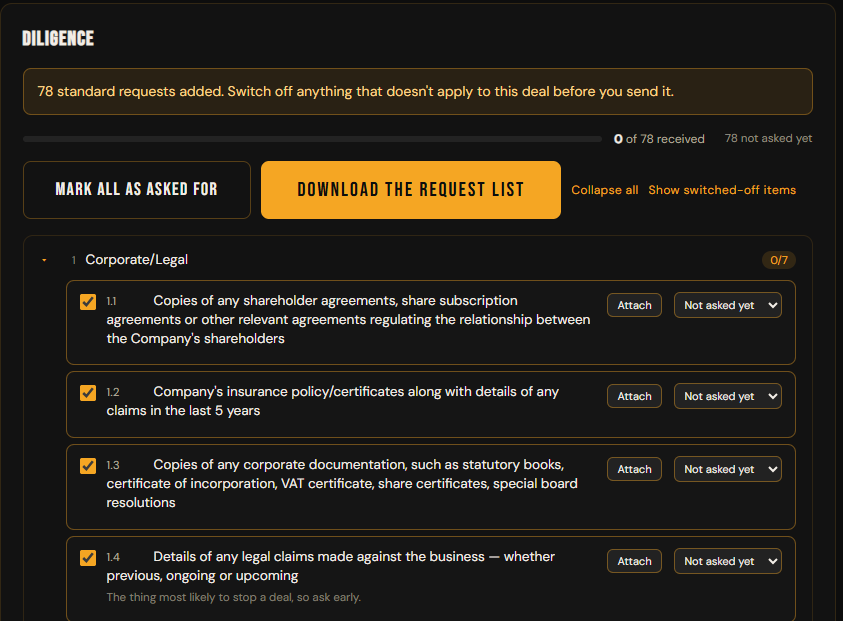
Diligence tracker
What has been requested, what has come back, and what has been outstanding long enough to chase.
Findings
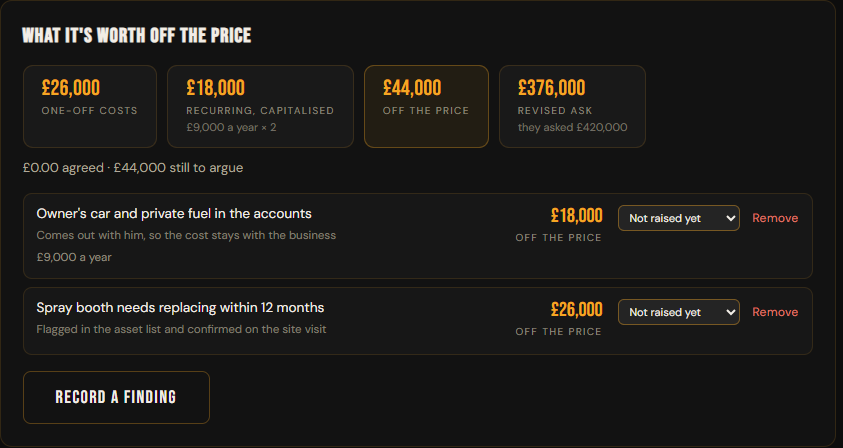
Every problem found, with the ones you have marked as deal-breakers separated from the ones that are simply price.
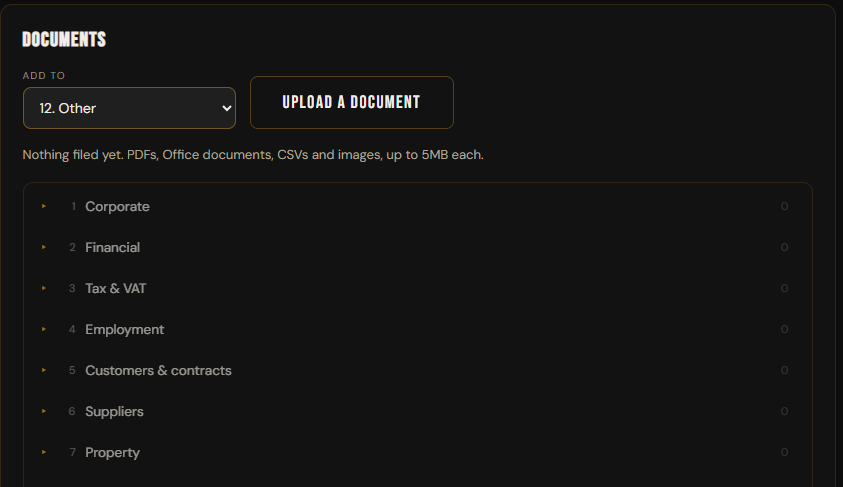
Data room
Every document for the deal in one place, so the answer to "where is the lease" takes a second.
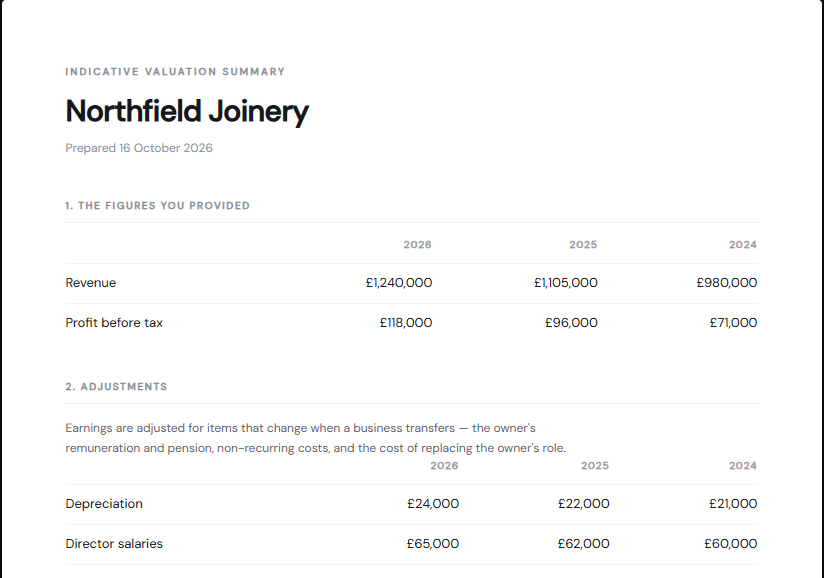
Valuation summary
The document that leaves the building — your numbers, your reasoning, as a PDF you can send to a seller or a lender.
The awkward question, answered properly.
DEALCLUB buys businesses too. So putting an off-market target into our platform is a fair thing to hesitate about, and you deserve a straight answer rather than reassurance.
Your deals are private by default. Nobody else sees a target name, a seller's number or a set of accounts unless you choose to share that specific deal — which you would do to ask for help on it. We only see what you share, and every access is logged.
What we will not tell you is that we cannot see it. Anyone who runs a database can read it, and a company claiming otherwise is either misleading you or has encrypted the data so thoroughly that it could never help you with a deal. The protection is that access is restricted per deal and recorded — not that it is technically impossible.
Two plans. The Toolkit is in both.
Founder pricing while the platform is new. No VAT to add — DEALCLUB Limited is not VAT registered, so these are the figures you pay.
The pipeline, deal records, valuation modeller, diligence tracker and data room — plus the full Toolkit.
- The full Toolkit — 40+ templates, lifetime of your subscription
- Unlimited deals in the pipeline
- Valuation modeller, risk ratio and implied multiples
- Diligence tracker, findings and data room
- Companies House lookup and accounts reading
Everything in Deal HQ, plus the sourcing engine: search across Companies House and the public registers, build lists, and write to owners directly.
- The full Toolkit — 40+ templates, lifetime of your subscription
- Unlimited deals in the pipeline
- Valuation modeller, risk ratio and implied multiples
- Diligence tracker, findings and data room
- Companies House lookup and accounts reading
- Sourcing: search Companies House and the public registers together
- Sourcing: prospect lists, letter templates and print-and-post
Cancel whenever you like — no minimum term. Already bought the Toolkit outright? That stays yours whatever you do here. The Toolkit on its own is still a one-off payment.
Put one deal in it.
The quickest way to know whether this is useful is to load a deal you are already looking at and see what the numbers say about it.